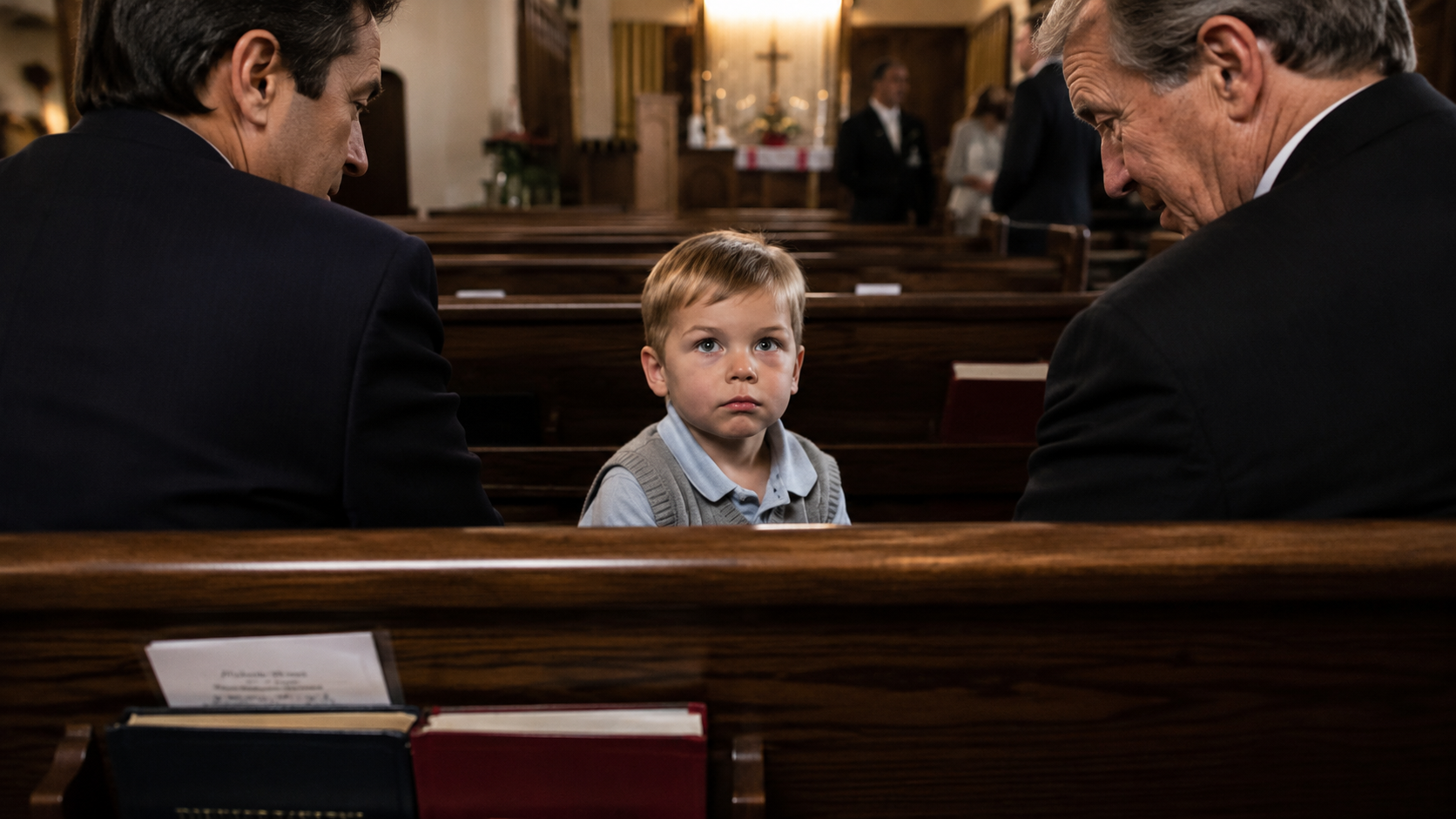
Those of us who view the Lord’s Day as a “Christian Sabbath” must wrestle with the question of what is and what is not appropriate activity for the day. Historically, our tradition, as reflected in the Westminster Confession of Faith, has viewed Sunday as a time to devote almost exclusively to formal acts of public and private worship. Work or deeds of mercy that are deemed “necessary” are allowed. But all unnecessary secular employment is to cease. What’s more, recreation is forbidden. Indeed, one may not needlessly think or talk about his job or Saturday’s college football game. Thus, following this tradition, we might say, “All worship and no play on the Sabbath makes Jack a holy boy.” But is this really what the Bible teaches?
This article will attempt to answer this question by examining Isaiah 58, the key proof text employed to establish the Sabbath recreation stricture. I will argue that Isaiah 58:13 does not prohibit recreation as such. Read in context, its target is hypocritical religion that combines outward Sabbath observance with the pursuit of a selfish and sinful agenda. Moreover, the larger biblical theology of the Sabbath suggests that rest and refreshment are not merely means to worship but among the blessings the Sabbath itself was designed to provide.
A Puritan View of the Sabbath
According to the Puritans, the Sabbath is a creation ordinance, which also finds expression in the Decalogue’s fourth commandment. Believers under the New Covenant are still obligated to observe the moral requirements of the creation ordinance and Ten Commandments. Moreover, Messiah’s death and resurrection have provided adequate theological warrant for shifting Sabbath observance from the last to the first day of the week (WCF 21.7). The Puritans described proper observance of the Sabbath in the following terms:
The Sabbath is then kept holy unto the Lord, when men, after a due preparing of their hearts and ordering of their common affairs beforehand, do not only observe a holy rest, all the day, from their own works, words, and thoughts about their worldly employments and recreations, but also are taken up, the whole time, in the public and private exercises of his worship, and in the duties of necessity and mercy (WCF 21.8).
Some Puritans described it as “a market day for the soul,” that is, a God-given holiday to transact spiritual business. Hence, it appears that for the Puritans Sabbath “rest” is not an end but a means to an end, namely, formal acts of public and private worship. Joseph Pipa concurs and writes, “The Sabbath commandment … teaches that we rest, setting aside our usual occupations in order to worship. The cessation from work and recreation prescribed by the Sabbath commandment frees us to worship.1Emphasis added; “The Christian Sabbath,” in Perspectives on the Sabbath, ed. Christopher John Donato (B&H Academic, 2011), 131. Pipa further elaborates by posing the question, “Does this mean it is wrong to take a nap on Sunday afternoon?” To which he replies,
To answer the question you must determine the purpose of the nap. Is it to refresh you so that you can pursue with renewed vigor the purposes of the day and your calling, or is it a choice of idleness because you do not want to do anything else? Some people need a nap to stay awake for the evening service or to be able to read later without drowsiness, while others might need to go for a vigorous walk in order to stay alert.2“The Christian Sabbath,” 142.
Thus Pipa, following the Westminster-Puritans, sees physical rest not as an end but as a means to an end. Some moderate physical activity, like taking a brisk walk, may be permissible if its goal is to increase our alertness so that we engage in the real purpose of the day. But Pipa is careful to distinguish taking a walk from forms of recreation: “moderate recreation the other six days is [God’s] gift.” And he, like the Puritans, censures any “unnecessary conversation about [one’s] work and recreation.” Although some conversation about the previous or upcoming week may be necessary for Christian fellowship on Sunday, “the details of our work and recreation are not to be the focus of our attention; rather, we are to set our minds on the things of the Lord.”3“The Christian Sabbath,” 169. For some historical surveys and analyses of Puritan sabbatarian doctrine and practice, see James T. Dennison Jr., The Market Day of the Soul: The Puritan Doctrine of the Sabbath in England 1532-1700 (University Press of America, 1983); Kenneth L. Parker, The English Sabbath: A Study of the Doctrine and Discipline from the Reformation to the Civil War (Cambridge University Press, 1988); John H. Primus, Holy Time: Moderate Puritanism and the Sabbath (Mercer Press, 1989).
In a moment, I want to explore the question of whether the Bible depicts “rest” on the Sabbath simply as a means to an end or whether rest is itself an aim, element, or purpose of the Sabbath. Before that, I would like to examine the biblical basis on which the Puritans, Pipa, and other Reformed writers preclude recreation or unnecessary talk about such on the Sabbath.
The Key Text–Isaiah 58:13
The key proof text used for the stricture against engaging in or unnecessarily talking about recreation on the Sabbath is Isaiah 58:13.4According to Dennison, in addition to their appeal to Isaiah 58:13, the Puritans also censured recreation on the Sabbath based on an inference that it would interfere with a person’s sanctification. The Market Day of the Soul, 144-45. Since it constitutes the conditional protasis (“If you …”) for the consequent apodosis (“then ….”) in verse 14, I will cite them both together:
If you turn back your foot from the Sabbath, from doing your pleasure on my holy day, and call the Sabbath a delight and the holy day of the LORD honorable; if you honor it, not going your own ways, or seeking your own pleasure, or talking idly; then you shall take delight in the LORD, and I will make you ride on the heights of the earth; I will feed you with the heritage of Jacob your father, for the mouth of the LORD has spoken.5All Scripture citations are from the English Standard Version unless otherwise noted.
On the one hand, the text positively enjoins setting apart, honoring, and enjoying the Sabbath. On the other hand, the text calls on God’s people to refrain from their own “ways,” “pleasure,” and “talk.” Obviously, the scope of these three strictures cannot be absolute, as if all activity and speech were inappropriate. The question is, then, precisely what “ways,” “pleasure,” and “talk” does the text censure?
The Traditional Sabbatarian Reading
Matthew Henry provides us with the standard Puritan interpretation of the key phraseology in the text:
On sabbath days we must not walk in our own ways (that is, not follow our callings), not find our own pleasure (that is, not follow our sports and recreations); nay, we must not speak our own words, words that concern either our callings or our pleasures; we must not allow ourselves a liberty of speech on that day as on other days, for we must then mind God’s ways, make religion the business of the day; we must choose the things that please him; and speak his words, speak of divine things as we sit in the house and walk by the way.6A Commentary on the Whole Bible, 6 vols. (1712, reprint; Old Fleming H. Revell, 1983), 4:341. See also William Twisse, prolocutor of the Westminster Assembly, Of the Morality of the Fourth Commandment, as Still in Force to Binde Christians (London, 1641), 241-46. Wilhelmus à Brakel, a Dutch minister and contemporary of the Puritans, believes the prohibition in Isaiah 58:13-14 “pertains to sailing, horse-riding, fishing, bird-hunting, playing tennis, playing ball ,… [E]ven more to games of chance, playing cards, and playing with dice.” The Christians Reasonable Service, 4 volumes, trans. Bartel Elshout (Soli Deo Gloria, 1994), 3:144.
Henry’s reading corresponds closely to the language of the Confession. And, as noted above, this is the text on which Pipa bases his strictures against engaging in or unnecessarily talking about recreation.7Others who support the Puritan stricture on recreation include Robert Shaw, An Exposition of the Westminster Confession of Faith (1845; repr., Christian Focus Publications, 1992), 233-35; G. I. Williamson, The Westminster Confession of Faith for Study Classes (Presbyterian and Reformed, 1964), 172-73; Chad Van Dixhoorn, Confessing the Faith: A Reader’s Guide to the Westminster Confession of Faith (The Banner of Truth, 2014), 293-95; Robert Paul Martin, The Christian Sabbath: Its Redemptive-Historical Foundation, Present Obligation, and Practical Observance (Trinity Pulpit Press, 2015), 361-71; Samuel Waldron, The Lord’s Day: Its Presuppositions, Proofs, and Practice (Amazon Digital Services, 2017), Kindle, Loc. 2466 to 2482. Lane Keister also defends the Puritan understanding of Isaiah 58:13 and seems to suggest that “boxing” may have been one of the forms of recreation explicitly censured in the text.8Lane Keister, “The Sabbath Day and Recreations on the Sabbath,” The Confessional Presbyterian, Volume 5 (2009): 223-39. He refers to “boxing” twice in his article (237, 238). While he does not clearly identify where in the passage he finds it, the reader can presume he is referring to the language of verse 4a: “Behold, you fast only to quarrel and to fight and to hit with a wicked fist” (Isaiah 58:4). But as a consideration of the context reveals, Yahweh is condemning fighting and physical abuse, not sparring.
Toward a More Contextual Reading
While I support the Puritan’s redemptive-historical justification of a first-day Sabbath for New Covenant believers,9The Puritans ground the redemptive-historical shift of the Sabbath-obligation from the seventh to the first day of the week on the basis of Christ’s resurrection (WCF 21.7). I concur with this approach and attempt to develop it further by drawing a link between the royal connotations of Sabbath-rest and the royal ramifications of Christ’s resurrection. See my article, “Commemorating Christ’s Coronation: How I Justify a First-Day Sabbath,” in In Service to the Church: Essays in Honor of Dr. Robert Paul Martin, ed. Brian Borgman (Free Grace Press, 2020). I do not believe their reading of Isaiah 58:13 supports an unqualified censure on engaging in or talking about recreation on the Lord’s Day. The traditional interpretation, in my estimation, is not sufficiently sensitive to the larger context and, therefore, misinterprets to varying degrees the strictures. Even the tendency to employ this text in the service of viewing the Sabbath primarily as a day for formal acts of worship and religious ritual fails to capture the main thrust of the passage.
How, then, should we properly read Isaiah 58:13?
To begin with, it is crucial to note that verses 13 and 14 are part of a larger pericope that begins at verse 1 of the same chapter. Alec Motyer has not only noted this fact but has discerned the following chiastic structure,10The Prophecy of Isaiah: An Introduction & Commentary (InterVarsity Press, 1993), 478-79. which I offer in a slightly abbreviated form:
A1 The voice of rebuke (1)
B1 A fast without a blessing (2-5)
C Contrast: the Lord’s chosen fast and blessing (6-12)
B2 A feast with a blessing (13-14a)
A2 The voice of promise (14b-d)
The reader should note how the parallel elements, i.e., A1 and A2, B1 and B2, stand in a contrastive relationship. Accordingly, we can best understand the sort of Sabbath-observance God commends in verses 13-14a by considering the opposing practice God condemns in verses 2-15.
The People’s Fast: Mere Religious Formalism
One may want to make some adjustments to the wording and textual parameters of each heading. However, Motyer’s contrast of the hypocritical religious ritual described in verses 2-5 with the true religion commended in verses 6-14 seems beyond dispute. Accordingly, I would suggest that we interpret the strictures of verse 13 in light of what is condemned in verses 2-5, which I will cite below:
Yet they seek me daily and delight to know my ways, as if they were a nation that did righteousness and did not forsake the judgment of their God; they ask of me righteous judgments; they delight to draw near to God. “Why have we fasted, and you see it not? Why have we humbled ourselves, and you take no knowledge of it?” Behold, in the day of your fast you seek your own pleasure, and oppress all your workers. Behold, you fast only to quarrel and to fight and to hit with a wicked fist. Fasting like yours this day will not make your voice to be heard on high. Is such the fast that I choose, a day for a person to humble himself? Is it to bow down his head like a reed, and to spread sackcloth and ashes under him? Will you call this a fast, and a day acceptable to the LORD?
The picture is that of religious formalism and crass hypocrisy. The people are outwardly engaged in formal acts of worship. They are praying. They are fasting. They are sitting on sackcloth and ashes with bowed heads as a sign of penitence and self-consecration. Inwardly, however, their hearts are far from God. Though they feign delight in God, they are really pursuing their own pleasure (58:3), the very thing they should not be doing on the Sabbath (58:13).
Excursus: Fasting on the Sabbath?
Some object that “the day of your fast” (58:3) cannot be a reference to a weekly Sabbath-day since the Scriptures do not require fasting on the Sabbath (except for the Day of Atonement, Lev. 16:29-31) and later Jewish tradition seems to discourage fasting on the Sabbath.11See The Book of Jubilees 50:12-13.
In response to this suggestion, I would point out the following: First, as noted above, the structural parallelism strongly suggests a contrastive connection between vv. 2-5 and vv. 13-14a. Thus, the latter verses should be interpreted against the backdrop of the former. Second, this parallelism is further underscored at the verbal/semantic level: “you seek your pleasure” (תמצאו חפץ) done on “the day of your fast” (v. 3) is parallel with “seeking your pleasure” (ממצוא חפצך) from which God calls them to refrain on “the Sabbath” (v. 13). Third, while the weekly Sabbath was normally a day for feasting (Neh 8:9-10), the Scriptures did not prohibit individuals from fasting on the Sabbath for special needs or occasions. Otherwise, Moses and Jesus would stand condemned for fasting forty days and forty nights (Exod 34:28; Deut 9:9-10; Matt 4:2). Fourth, if the Day of Atonement, which is literally called “the Sabbath of Sabbaths” (Lev 16:31), called for fasting and self-affliction, it is not hard to see how Jews attempting to offer Yahweh “works of supererogation” might reason from the greater-to-the-lesser and fast on weekly Sabbaths when attempting to placate God or acquire his blessing. Such self-righteous religious formalism is at the heart of God’s censure in Isaiah 58. Fifth, it turns out that there are two strands of Jewish tradition that developed before and after the time of Christ: one that tended to discourage or oppose fasting on the Sabbath (noted above) and another that tended to encourage and support fasting on the Sabbath. In the words of Jewish scholar Yitzhak Gilat,
One school of thought considered the Sabbath totally dedicated to God, and thus felt it should be devoted entirely to prayer, study and the cleansing of the soul. This approach was accompanied by asceticism, fasting and general denial of pleasure. The other approach stressed the delight and joy emanating out of the Sabbath, a day of rest granted Israel for the express purpose of eating, drinking, and enjoyment in general.12“On Fasting on the Sabbath,” Tarbiz 52 (1982), ii, cf. 1-15. According to Jewish scholar Eliezer Segal, “If we examine the talmudic sources more carefully, we discover that the attitudes of the ancient Jewish sages toward eating on the Sabbath were more ambivalent than might be suggested by our current practice.” He then points to the second century ce Rabbi Yose ben Zimra who “went so far as to declare that Jews who fasted on Shabbat were assured of the cancellation of any negative decrees that had been issued against them by the heavenly court.” Sanctified Seasons (University of Calgary, 2008), 2. See also the discussion in Eliezer Diamond, Holy Men and Hunger Artists: Fasting and Asceticism in Rabbinic Culture (Oxford University Press, 2004), 93-127.
This would explain why ancient Greek and Roman writers attribute Sabbath-fasting to the Jews.13See R. Goldenberg, “The Jewish Sabbath in the Roman World,” in vol. 2 of W. Haase and H. Temporini, eds. Aufstieg und Niedergang der Romanischen Welt (Walter de Gruyter, 1979), 439-41. This may also explain the Pharisee’s boast in Luke 18:12, which in the original reads, νηστεύω δὶς τοῦ σαββάτου, and could be translated “Ι fast twice per Sabbath.” While the Greek σαββάτον may mean “week,” it is not impossible that “Sabbath” is the proper rendering here.14Admittedly, there is some lexical support for translating the Greek as “week” in a few cases. Moreover, the late first century Didache alludes to a Jewish custom of fasting on Mondays and Thursdays. Not surprisingly, most English translations and commentators opt for “twice a week.” On the other hand, the Latin Vulgate translates the verse, jejuno bis in sabbato. Moreover, as noted above, there were at least two traditions that developed in Judaism, one that discouraged fasting on the Sabbath and another that encouraged fasting on the Sabbath. So it is not inconceivable that the Pharisees, who prided themselves on their ritual strictness, followed that strand of Judaism that called for fasting on the Sabbath.
Therefore, the objection that “the day of your fast” (58:3) cannot be a reference to a weekly Sabbath-day is far from conclusive. And in light of the larger context and structure of our passage, it makes more sense to interpret verses 2-5 as a ritualistic and duplicitous form of Sabbath-keeping that stands in stark contrast with God’s prescribed Sabbath in verses 13-14a.
“One’s Own Pleasure” = One’s Own (sinful) Agenda
What is their “own pleasure” in this case? The crucial interpretive question is not what ḥēpeṣ (“pleasure”) might mean in isolation, but what it means within the literary argument of Isaiah 58. The Hebrew term translated pleasure is the noun חפץ (chaphets) and often refers to that which brings one enjoyment, gratification, or satisfaction (Psa 1:2; Eccl 12:1; Mal 1:10). The word can also refer to an object or objective that one desires (2 Sam 23:5; 1 Kings 5:24; 10:13; Job 31:16). A somewhat similar sense denotes the idea of one’s plan, purpose, or agenda. For instance, in Isaiah 44:28, God says of King Cyrus, “He shall fulfill all my purpose” (חפצי). Later, God declares, “My counsel shall stand, and I will accomplish all my purpose (חפצי). The wise man of Ecclesiastes tells us, “To every thing there is a season, and a time to every purpose [לכל חפץ] under the heaven (Eccl 3:1, KJV).
It is this broader sense of one’s purpose, desire, or agenda that seems especially well suited to the context of Isaiah 58. What these sinful Israelites were pursuing on the Sabbath was their own agenda (58:3, 13) rather than God’s. While they were going through all the outward motions of meticulous “Sabbath-keeping,” they were simultaneously oppressing their workers (58:3b). The reference to quarreling and striking with the fist (58:4) is most certainly not a reference to the sport of boxing.15Pace Keister, “The Sabbath Day and Recreations on the Sabbath,” 237, 239. Rather, the description highlights the violent and heavy-handed way in which they were treating their servants. The scenario depicted, then, is a situation in which certain well-to-do Israelites were putting on a façade of religious devotion while coercing their servants to work.
This reading is supported by the subsequent context where God contrasts the “fast” he approves of and enjoins the Israelites to observe the Sabbath in truth:
To lose the bonds of wickedness,
To undo the straps of the yoke,
To let the oppressed go free,
And to break every yoke.To share [their] bread with the hungry,
To bring the homeless poor into [their] house,
To cover the nakedTo take away the yoke, the pointing of the finger, and speaking wickedness.
To satisfy the desire of the afflicted (Isa 58:6-7, 9-10).
So, the “way” and “pleasure” from which the Israelites are to refrain on the Sabbath is not recreation in this context. Rather, it is a hypocritical religious ritual on the Sabbath that is used as a cloak to cover the pursuit of one’s own selfish and sinful agenda.
“One’s Own Words” = Empty Religious Talk
Furthermore, the stricture against “talking idly” likely refers to something more specific than “chit-chat” or “small talk.” Literally, the last phrase of Isaiah 58:13 reads, “speaking words” (ודבר דבר). Contextually, this may allude to the harsh and ungodly words these religious hypocrites were speaking to their workers to browbeat them into submission (see 58:9), i.e. overtly sinful speech. It may also refer, as some suggest, to making verbal business transactions (see NET). The Israelites were outwardly giving the appearance of doing business with God (2-5) when in fact they were carrying on their business as usual.16See, for example, John Peter Lange, Isaiah, trans. Philip Schaff, in Commentary on the Holy Scriptures: Critical, Doctrinal, and Homiletical (1878, reprint; Zondervan, 1957), 634.
I am more inclined, though, to a third interpretation. The Hebrew phrase ודבר דבר occurs in at least two other places. Deuteronomy 18:20 depicts one who utters false prophecy. The phrase also occurs in Hosea in the plural (“they speak words”) where it’s used in parallel with the phrase, “They utter mere words [דברו דברים]; with empty oaths they make covenants” (Hos 10:4, ESV). In both cases, the idea is that of false or empty religious speech. Those indicted in Isaiah 58 were offering pious sounding prayers and possibly making extravagant vows. However, their “lip service” to God was nothing more than a religious façade and their agenda (“pleasure”) was not the advancement of God’s kingdom but the pursuit of their own sinful self-interests. Whatever precise nuance we assign to the expression, the context provides little warrant for expanding it into a prohibition against ordinary conversation about one’s work, hobbies, or activities.
God’s Fast: Deeds of Love and Mercy
God contrasts his Sabbath “fast,” which was more like a “feast,” with the formalistic and false Sabbath-keeping of the Israelites. God’s Sabbath-day was, of all days, especially suited to free the bondservant from his burden, to feed the hungry, and to minister to the afflicted. The Sabbath was designed for the benefit of human beings (see Mark 2:27) and, therefore, provided a reprieve for those burdened under the weight of sin and the curse. How could the Israelites so quickly forget this!
You shall remember that you were a slave in the land of Egypt, and the LORD your God brought you out from there with a mighty hand and an outstretched arm. Therefore the LORD your God commanded you to keep the Sabbath day (emphasis added; Deut 5:15).
At this point, I believe the wording of Shorter Catechism Q60 may unintentionally give the wrong impression. In response to the question, “How is the Sabbath to be sanctified?” the Catechism replies, “The sabbath is to be sanctified by a holy resting all that day, even from such worldly employments and recreations as are lawful on other days; and spending the whole time in the public and private exercises of God’s worship, except so much as is to be taken up in the works of necessity and mercy” (emphasis added). In this case, deeds of mercy are subordinate to corporate and private worship, that is, exceptions to the rule. But if our analysis of Isaiah 58 is on target, deeds of benevolence and mercy are not simply permissible; they are part of the essence of Sabbath-keeping and of “true religion” (see James 1:27).
This dimension of Sabbath observance is not only enjoined in Isaiah 58 but is exemplified in the teaching and ministry of the Lord Jesus Christ. The Gospel writers record at least eight different incidents in which Jesus gives us His perspective and/or practice of the Sabbath.17These include Matthew 12:1-14; Mark 1:21-28; 2:23-28; 3:1-6; 6:2-16; Luke 4:16-30; 31-37; 6:1-5; 6-11; 13:10-17; 14:1-6; John 5:1-17; 7:14-24; 9:1-41. In several of these incidents, Jesus enters the synagogue and teaches (Mark 1:21; 6:2; Luke 4:16; 6:6; 13:10). Therefore, we can confidently say that Jesus viewed the Sabbath as a day for corporate worship. However, in seven of the eight incidents, Jesus is depicted as engaging in works of benevolence and mercy on the Sabbath.
For example, Jesus heals a man with a withered hand and declares, “So it is lawful to do good on the Sabbath” (Matt 12:9-13). He also healed a woman who had been crippled for eighteen years and, when rebuked for performing the deed on the Sabbath, justifies his action by declaring, “Ought not this woman, a daughter of Abraham whom Satan bound for eighteen years, be loosed from this bond on the Sabbath day?” (Luke 13:12-16). On another occasion, Christ enables a lame man to walk on the Sabbath (John 5:1-9) and defends his actions by asserting, “My Father is working until now, and I am working” (John 5:17). In other words, while the primeval Sabbath marked the end of God’s work of creation, it did not signal the end of all divine activity. God continued to govern the world through his work of providence. And since humanity’s fall, one of the primary features of God’s providence is His work of redemption, i.e., his activity of mercy on behalf of humankind.
It is important to note that each of the cases of healing Jesus performed on the Sabbath above involved non-emergency situations. For this reason, I think Pipa’s stricture on non-emergency surgery needs qualification. He remarks, “A doctor ought not to schedule nonemergency surgery on Sunday, but in the case of a crisis, he will operate to save a life or protect someone from more serious danger or illness.”18“The Christian Sabbath,” 143. Now perhaps Pipa does not intend his remark to apply to all doctors in all situations. Many doctors and surgeons do not normally practice on Sundays. However, doctors working in hospitals or in emergency clinics do work on Sunday, and they do not always have the privilege, nor should they feel the obligation to distinguish between emergency and non-emergency conditions in determining whether they should assist the patient. Following this line of thought, Jesus should have waited until the following day to perform these acts of mercy. But he did not. Of course, Christ‘s Sabbath healings possess a unique redemptive-historical significance. Nevertheless, the ethical principle that Jesus himself draws from his acts of mercy is general: “It is lawful to do good on the Sabbath” (Matt. 12:12).Thus, Christ and the Scriptures elevate rather than subordinate benevolence and mercy on the Sabbath. Sam Waldron agrees and writes,
Duties of mercy are not forbidden on, are not even an exception to the Sabbath. The Lord’s Day Sabbath is a very appropriate day for such works; even such ministries as are very vigorous and very tiring (like pulling a sheep out of pit) are appropriate. The meeting of pressing human (and even animal) need is not to be put off because of the Lord’s Day.19The Lord’s Day, Kindle, loc. 2429-2436.
The Real Message of Isaiah 58
Those who use Isaiah 58:13 to censure recreation or small talk about one’s weekly activities are placing a theological expectation on a text that the text simply cannot bear. It turns out that Isaiah 58:13 provides no basis for a censure either against engaging in recreation or against talking about recreation or other activities done during the week.20Roger Beckwith and Wilfrid Stott agree with the Puritans that the Lord’s Day is a Christian Sabbath. Nevertheless, they view the Puritans’ recreation stricture based on Isaiah 58:13 as “a doubtful interpretation” and observe, “Even if ‘pleasure,’ not ‘business,’ is the right translation there, it may well refer to willfulness rather than to recreation.” The Christian Sunday: A Biblical and Historical Study (Baker Book House, 1978), 145, n.18. One might infer from the passage that God’s people should refrain from engaging in weekly employment or doing unnecessary business on the Lord’s Day. But even such an inference, if valid, is not the main thrust of the passage. The Sabbath breakers of Isaiah 58:13, when viewed in the larger context, are not those who toss Frisbees or ride bikes or play volleyball. Rather, they are the “religious.” They are those outwardly engaged in the public and private worship of Yahweh but inwardly engaged in their personal agenda of greed, exploitation of others, and godless living. In sum, those who appear to be the most religiously devout Sabbath-keepers may in fact be the most notoriously wicked Sabbath-breakers! Hence, all “worship” and no play does not necessarily make Jack a holy boy. Quite the opposite may be true.21For a similar and helpful exposition of Isaiah 58:13, see Charles L. Jacob, “Eat the Fat, Drink the Sweet, and Be Merry: A Biblical Defense for Play on the Lord’s Day,” IIIM Magazine Online, 2:12 (March 2000); accessed February 20, 2018: http://thirdmill.org/articles/cha_jacob/TH.Jacob.Sabbath.html.
Recreation on the Sunday?
To answer the question of whether forms of recreation are appropriate on Sunday, one must step back and consider the larger aim or purpose for the Sabbath. That aim or purpose, I would suggest, is larger than formal acts of public and private worship.
“Rest” as a Primary Aim of the Sabbath
Scripture presents physical rest and refreshment not merely as means enabling us to worship but as essential elements of the Sabbath’s God-given purpose.
Six days you shall do your work, but on the seventh day you shall rest; that your ox and your donkey may have rest, and the son of your servant woman, and the alien, may be refreshed (Exod 23:12).
That physical rest is in view is supported by the following considerations. First, the antithetical construction of the fourth commandment where seventh-day rest is juxtaposed with six-day labor supports this conclusion (cf. Exod 20:9-10; 31:14-15; Deut 5:13-15). In simple terms, the antithesis is not “don’t work but (instead) worship.” Rather, it’s “don’t work but (instead) rest.” Second, the phrase “you shall rest” translates the Hebrew verb שבת, which may be rendered, “to sabbath.” In this context, the verb is synonymously parallel to the verbs נוח (“to rest”) and נפש (“to be refreshed”), both of which refer elsewhere to physical rest and rejuvenation when predicated of human activity.22 Third, the fact that the Israelite’s animals are also to be relieved of their burdens to that they “may have rest” points to physical rest rather than cultic worship (“spiritual rest”) as the primary aim. Fourth, instances of Sabbath-breaking, whether real or alleged, primarily center on a failure to rest from unnecessary labor rather than a failure to engage in public or private worship (Exod 31:14-15; 35:3; Num 15:32-36; Neh 13:15-18; Jer 17:21-22; Amos 8:4-8; Matt 12:1-2; Luke 13:14; John 5:16-17).
So physical rest and rejuvenation is a primary aim or focus of the Sabbath day.23John Frame, following the earlier position of Meredith Kline, reaches the same conclusion. See his The Doctrine of the Christian Life (Presbyterian & Reformed, 2008), 523-24, 540-44. Of course, such rest and rejuvenation may be properly viewed as worship in the broader sense when they are done in obedience to God’s command and for his glory (1 Cor 10:31).
Sabbath Activities Consistent with Rest
The primary focus on rest does not preclude corporate worship. On the contrary, corporate worship is an essential component of Sabbath-rest (see Lev 23:3; Acts 20:7; 1 Cor 16:1-2). But, as we have seen, so are deeds of benevolence and mercy that occur outside the context of formal worship. Moreover, the Sabbath is a day for fellowship, feasting, and celebration. Nehemiah and Ezra had to remind the returned exiles of Israel of this point:
“This day is holy to the LORD your God; do not mourn or weep.” For all the people wept as they heard the words of the Law. Then he said to them, “Go your way. Eat the fat and drink sweet wine and send portions to anyone who has nothing ready, for this day is holy to our Lord. And do not be grieved, for the joy of the LORD is your strength” (Neh 8:9-10).
Formal acts of public and private worship are parts but not the whole of Sabbath-day observance. Scripture also associates the day with deeds of mercy, evangelism, fellowship, feasting, and celebration. And all these should be carried out in a way that is consistent with enjoying physical rest and rejuvenation for oneself as well as providing rest and reprieve for others.
Some Moderate Recreation is Permissible
Keeping the larger aim and purpose of the Sabbath in view justifies, in my opinion, some moderate forms of recreation on Sunday. The verb “recreate” derives from the Latin recreare, meaning “to create anew, to restore, revive, or refresh.” Thus, to recreate is to engage in an activity, pastime, or exercise that is aimed at refreshment and recuperation.24Merriam-Webster.com defines “recreation” thus: “refreshment of strength and spirits after work; also: a means of refreshment or diversion.” The Oxford English Dictionary defines recreation as “the action of recreating (oneself or another), or fact of being recreated, by some pleasant occupation, pastime or amusement.” Accordingly, I see nothing wrong with tossing a Frisbee, going on a bike ride, or playing a little volleyball on Sunday, especially since these often provide a good opportunity for Christian fellowship. Reformed Baptist pastor and author Bruce Ray agrees,
To recreate is to restore, refresh, or put fresh life into someone or something. Recreation is any lawful activity that renews the body or soul…. To the degree that recreation contributes to our physical and spiritual renewal, some moderate recreation may be admissible on the Sabbath.25Celebrating the Sabbath: Finding Rest in a Restless World (Presbyterian & Reformed, 2000), 107, 110.
In light of these considerations, it seems to me that the Puritan view of Sabbath observance overreaches the strictures of the Bible. Beckwith and Stott, proponents of a Christian Sabbath concur and remark, “The desire among the Puritans to answer all cases of conscience about the Christian sabbath, and to exclude not only work but also innocent recreation, was in doubtful harmony with the Pauline principle of Christian liberty and with the fact that the sabbath and the Lord’s Day are joyful feasts.”26The Christian Sunday, viii.
Questions to Ask Yourself
How do we determine when, how much and what kinds of recreation may be permissible and prudent on the Lord’s Day? Here, some questions may be helpful. First and foremost, does it interfere with corporate worship? I agree with the Synod of Dort when it discourages “such recreations that hinder [public] worship.”27See the “Post-Acta” (i.e., supplemental pronouncements) of the Synod of Dort (1618-19) on the Sabbath. Some believe that the Synod’s official position on the Sabbath was an accommodation to the English Puritan delegates and that the so-called “Continental View” of the Sabbath allowed for “restful” forms of recreation. Indeed, appeal is made to John Calvin himself who, allegedly, engaged in “lawn bowling” on the Lord’s Day (presumably between services). See R. C. Sproul, Truths We Confess: A Layman’s Guide to the Westminster Confession, 3 vols. (Presbyterian and Reformed, 2007), 342. However, the case for Calvin recreating on Sunday is apparently based on primarily anecdotal evidence. See Chris Coldwell, “Calvin in the Hands of the Philistines, Or, Did Calvin Bowl on the Sabbath?” The Confessional Presbyterian, Volume 6 (2010): 31-49. For this reason I would counsel a young person against pursuing a career in a professional sport that requires him to work on Sunday. Does it unnecessarily require others to labor for my recreation? I will not deny that watching a little football Sunday afternoon can be relaxing and that such relaxation is not necessarily inconsistent with the focus of the day. But one will have to wrestle with the question of whether his watching, say, NFL games on Sunday isn’t indirectly promoting an institution that seems to disregard the Sabbath and that requires others to skip out on Sunday worship.28In the end, I’ll leave the question of whether an individual believer may watch sports on Sunday up to his own conscience, encouraging him to be submissive to his own pastoral leadership and sensitive to the consciences of other believers. Does this activity refresh me or exhaust me? Some forms of “recreation” are so intense that they may be counter-productive to physical refreshment and, therefore, inappropriate for a day of rest. Such “play,” in these instances, is really “work.”29I do not think Sunday is a good day to compete in a twenty-five mile marathon or in a decathlon, both of which often require a few days for recovery. Additional questions include, does it promote Christian fellowship and enjoyment of God’s gifts, or does it effectively turn Sunday into an ordinary Saturday? Am I exercising my liberty with appropriate sensitivity to my church, family, and fellow believers? Can I receive it with thanksgiving to God as part of the day’s rest?
Conclusion
In summary, neither the biblical data nor the theological aim of the Sabbath provides an unqualified stricture on recreation. The common text used to justify that prohibition—Isaiah 58:13—actually condemns religious formalism and hypocritical worship. Furthermore, some modest recreation may, in fact, serve the overarching theological aim of the Lord’s Day: to promote physical and spiritual refreshment. The Lord’s Day should therefore be neither a day of ordinary business nor a day of grim religious austerity. It is God’s gracious gift to his people—a day to cease from ordinary labor, gather with the saints, delight in God, show mercy, enjoy fellowship, and receive the physical and spiritual refreshment our Creator knows we need. It may be the case, therefore, that both worship and some play on the Sabbath make Jack a holy boy.
Leave a Reply